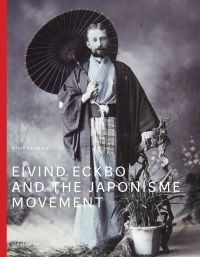
Eivind Eckbo and the Japonisme Movement
£42.00
Rare Special Editions available from ACC Art Books – More Information
Eivind Eckbo’s journey to Japan in 1905-06 and his collection of Japanese art and crafts must be seen in light of the great wave of fascination with Japan, the so-called Japanism, which developed in Europe and the United States in the late 19th century and into the 20th century.
Japan had been closed to the outside world for 200 years, and when the country finally opened its borders in 1853, Japanese art became the object of great admiration around the world. Japanese art was displayed at the great world exhibitions and in department stores and art dealers. A Japan mania or Japanomania soon developed, as the major exhibition at the National Museum in 2016 was called.
Japanese woodcuts – ukiyo-e – and Japanese crafts became the subject of a collecting craze among European artists, especially among the French Impressionists and among several Norwegian painters and designers.
In Norway, Japanese woodcuts were exhibited and sold at Blomqvist’s art store in the late 19th and early 20th centuries, and Japanese handicrafts; porcelain, ceramics, lacquerware, fans, parasols, lanterns and textiles were sold in large department stores such as Steen and Strøm. Eckbo’s collection of similar Japanese handicrafts was purchased during his trip to Japan and testifies to his great interest in all things Japanese. In the exhibition, it will be contextualized with what Norwegian artists and museums bought of Japanese art and handicrafts at this time. In 1931, Eivind Eckbo sponsored the purchase of a large collection ukiyo-e, which belonged to another Norwegian collector, to the National Gallery.
Eivind Eckbo’s photographs from his trip to Japan will be seen in connection with the motifs in the Japanese woodcuts in the exhibition, such as his photo of the sacred Mount Fuji. This photo meant a lot to Eckbo. He had it enlarged and framed – and it accompanied him throughout his life. Mount Fuji probably represented what he would later refer to as his awakening in the encounter with Japanese art and aesthetics. He often spoke of his stay in Japan in unusually warm language, and it was not only the art that fascinated him, but also Japanese concepts of honor and the philosophy of Zen Buddhism, which will also be highlighted in the exhibition.
The exhibition opens on October 14th at 6 pm. Read more about the opening event here.
Curator: Dr.philos.Widar Halén
Please log-in or create an account to see your recent items.