Gustave Fayet: Collector
£45.00
Rare Special Editions available from ACC Art Books – More Information
Exhibition: From 09.10.2026 to 08.03.2027
Occupying all the spaces of the Fondation Louis Vuitton, this major exhibition is presented in two parts, examining Gustave Fayet both as a collector and as a designer. It reveals how collecting, creating, and artistic commitment were deeply intertwined throughout his life, and presents a key figure of turn-of-the-century modernity who has long been unjustly overlooked.
An exhibition unprecedented in scale and scope, it brings together, for the first time in a century, more than 250 works from Gustave Fayet’s extraordinary collection, now dispersed around the world. They are presented alongside 375 of his own creations, most of them never before exhibited and specially restored for the occasion.Highlights include 10 paintings by Vincent van Gogh, 78 works by Paul Gauguin, 88 works by Odilon Redon, as well as paintings and pastels by Edgar Degas, Paul Cézanne, Henri de Toulouse-Lautrec, Pierre-Auguste Renoir, Berthe Morisot, Paul Signac, Pierre Bonnard, Edouard Vuillard and Henri Matisse.
The result of several years of research, the exhibition has been made possible through the collaboration of 64 international institutions and 71 private collections. This groundbreaking presentation sheds new light on a prominent figure who has gradually faded into obscurity: Gustave Fayet (1865-1925), a passionate collector, artist and prolific designer who was also a tireless and exceptional entrepreneur and a visionary in the field of decorative arts.
Though little known today, Fayet was one of the most influential advocates and pioneers of the avant-garde of his time – a man who played a key role in bringing modern art to the forefront in all its forms. He was among the first to collect works by van Gogh, to exhibit Picasso, and to establish a Gauguin “museum” in his home in the heart of Paris, housing a collection of nearly 200 works and attracting artists and leading collectors of the time. As a close friend and devoted champion of Odilon Redon, Fayet gave him the opportunity to create a monumental decorative ensemble for his abbey in Fontfroide in southern France – a remarkable work which remained largely unknown for many years.
Looking through your collection, I see that I am in the company of masters, and that makes me happy, but also rather shy. […] So, after all, there are people who know how to appreciate painting.”
Not only was Gustave Fayet an exceptional collector who assembled more than 740 major works of modern art (excluding prints): In the latter part of his life, he was also a designer whose success left a lasting mark on the decorative arts of the early 20th century. A painter, watercolorist, ceramicist, interior designer, designer of rugs, fabrics, and wallpaper, and book illustrator, he represented a generation whose life was permeated in all its aspects by art.
His designs, exhibited in leading galleries and major art fairs, attracted influential figures including Paul Poiret, Jacques Doucet, and Jeanne Lanvin. From Art Nouveau to Art Deco, Fayet played a key role in shaping a new aesthetic in which fine art and decorative art seamlessly merged. For Fayet, collecting and creating went hand in hand.
This first major international exhibition dedicated to this singular and, in many ways, pioneering figure reveals a rich and multifaceted world and opens a new chapter in the history of early 20th-century modern and decorative arts. This ambitious project brings together a total of 767 works and documents, presented across the exhibition’s two sections.
Examples of works being shown in France for the first time.
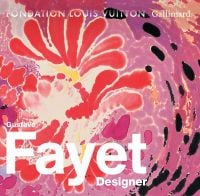
The second part of the exhibition takes an equally innovative approach, exploring the many facets of a designer and entrepreneur whose diverse body of work defies categorization. A landscape painter, he found in the diversity of Art Nouveau and Art Deco a vast field of experimentation that fuelled his insatiable curiosity. Over the years, he becomes a designer, immersing himself in every aspect of the decorative arts – as a ceramist, decorator, and designer of rugs, fabrics, wallpaper, and illustrated books – while also founding a fashion house. This remarkable versatility evokes the ‘touchatouism” (Jack of all trades) aspect described by Jean Cocteau.
Long inaccessible, scattered, or forgotten, his creations are reunited here for the first time. They reveal a vibrant and distinctly modern creative vision, where colour, pattern, and innovation converse with the major artistic movements of his time, shedding light on an essential yet often overlooked chapter in the history of the decorative arts.
Rooted in the late 19th-century Symbolist movement, Fayet played a key role in redefining modern interiors during the Roaring Twenties through ventures such as Maison Della and the Atelier de la Dauphine. Through commissions for Richard Burgsthal’s stained-glass windows at the Abbaye de Fontfroide, as well as his own designs for his Igny, La Dragonne, and Costebrune residences, Fayet cultivated a taste for whimsy which had a softening effect on the sober geometry of 1920s design. He is particularly characterized by his extraordinary floral vocabulary, first sketched on blotting paper and later transformed into fabrics, wallpaper, and rugs.
In 1896, Gustave Fayet launched his first venture in the decorative arts. Together with the painter and sculptor Louis Paul (1858-1922), a former student of Rodin, he founded a stoneware workshop in Béziers. By 1904, the workshop had produced more than a hundred ceramic pieces, several of which were exhibited at Siegfried Bing’s gallery in Paris in June 1898.
Please log-in or create an account to see your recent items.